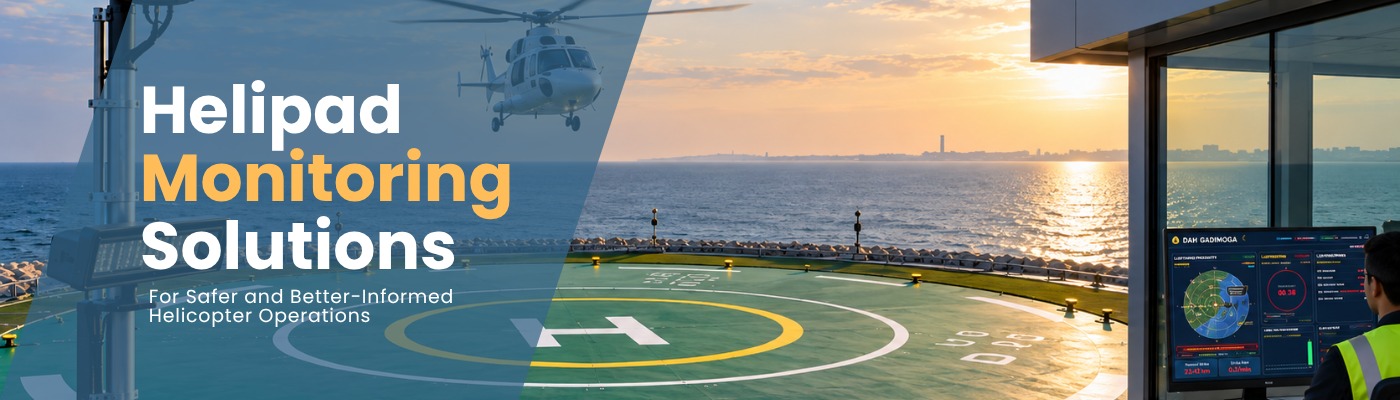
Helipad Monitoring Solutions for Safer and Better-Informed Helicopter Operations

Overview

Helicopter operations are highly dependent on the weather conditions prevailing at the landing and take-off site. Unlike general weather observations reported for a wider geographical area, conditions at an individual helipad can be influenced by local terrain, elevation, surrounding structures, and rapidly changing atmospheric conditions. Wind direction and speed can shift within a short period, visibility can deteriorate unexpectedly, and rainfall or other weather events can alter the conditions available to the pilot and ground crew.

For this reason, helipad monitoring solutions are an important part of maintaining situational awareness during helicopter operations. These monitoring solutions are designed to provide this site-specific information by continuously observing relevant meteorological parameters and making the collected data available for operational monitoring and assessment. The measured data can be collected through a data acquisition system, recorded for future reference, and communicated to local or remote monitoring interfaces.

In this solution page, we will look at what Helipad Monitoring Solutions are, why site-specific weather monitoring matters for helicopter operations, how these systems work, the key components involved, and the types of helipads and operational environments where they are commonly used.

Let's Discuss Your Project


What are the Helipad Monitoring Solutions?

Helipad Monitoring Solutions are purpose-oriented monitoring setups designed to provide weather and atmospheric information from a helicopter landing and take-off location. Instead of depending only on weather information available for a broader area, the solution is designed to collect relevant measurements directly at the helipad.

The configuration can include a combination of weather sensors, data acquisition equipment, communication systems, data logging, and monitoring interfaces. The combination depends on the location, environmental conditions, operational requirements, and parameters that need to be observed.

For example, a helipad may require continuous monitoring of wind speed and direction, while another location may also require visibility, temperature, humidity, pressure, rainfall, or other atmospheric measurements. The objective is to provide the right weather information for the specific helipad application, rather than installing unnecessary equipment that does not contribute to the monitoring requirement.


Why Are Helipad Monitoring Solutions Important?

Weather can vary from one location to another, even across the same large area. Terrain, buildings, elevation, coastal surroundings, and other local factors can influence the conditions experienced at a particular location. For helicopter operations, having weather information from the actual helipad can therefore provide useful local context. A Helipad Monitoring Solution can help organizations:

Monitor current weather conditions at the helipad

Observe changes in wind speed and direction

Monitor visibility during changing atmospheric conditions

Record temperature, humidity, and atmospheric pressure

Track rainfall and other selected weather parameters

Maintain historical weather records

Provide weather information to authorized personnel in real time

Support informed operational decisions based on available weather data

The monitoring solution provides information to support operational awareness. It does not replace the pilot's judgment, flight procedures, or applicable aviation regulations.


How Do Helipad Monitoring Solutions Work?

A Helipad Monitoring Solution works by connecting meteorological sensors, a data logger or controller, communication equipment, and a monitoring interface into one integrated setup. The sensors installed at the helipad continuously measure selected conditions such as wind speed, wind direction, visibility, temperature, humidity, atmospheric pressure, and rainfall. The collected readings are processed and recorded by the data acquisition system.

The weather data is then transmitted to a local display, monitoring software, or remote platform for real-time access and historical review, depending on the system configuration. This provides aviation and ground teams with site-specific weather information from the helipad, helping them maintain better awareness of changing conditions and support operational decisions.


Where Are Helipad Monitoring Solutions Used?

Helipad Monitoring Solutions are used across locations where helicopters operate and local weather conditions need to be monitored.

Hospital Helipads – Support weather awareness for emergency and medical helicopter operations.

Airport Helipads – Provide local weather information for helicopter operations within airport facilities.

Offshore Helipads – Helps monitor changing wind, visibility, and other weather conditions at offshore landing sites.

Defence & Military Helipads – Supports weather observation for helicopter operations at defence facilities.

Industrial Helipads – Provides site-specific weather data for helicopter operations at industrial and remote facilities.

Remote Helipads – Enables continuous weather monitoring where access to local weather information may be limited.

Benefits of Helipad Monitoring Solutions

Helipad Monitoring Solutions provide real-time information about the helipad environment and operating conditions. They help improve safety, support better decision-making, and ensure smooth helicopter operations. The main benefits are:

Improves helicopter landing and take-off safety.

Monitors weather conditions such as wind speed and direction.

Provides real-time information to pilots and operators.

Detects unsafe operating conditions before and during helicopter operations.

Helps reduce operational risks and accidents.

Supports quick and informed decisions by the operator.

Records important operational and weather data for future reference.

Improves the efficiency and reliability of helicopter operations.

Supports compliance with applicable aviation safety requirements.


Why Choose Meteoxperts Solutions for Helipad Monitoring Solutions?

Choosing the right instruments is only one part of developing a reliable monitoring setup. Sensor compatibility, installation conditions, data acquisition, communication, and system integration also need to be considered. Meteoxperts Solutions supports customers with:

Application-based instrument selection

Technical consultation

Customized monitoring configurations

Weather sensor and data logger integration

Installation and commissioning support

Calibration and preventive maintenance

Project-specific technical guidance

We follow an application-oriented approach to help customers select monitoring equipment according to their project objectives, environmental conditions, and technical requirements.


Key Components of a Helipad Monitoring Solution

We provide a range of meteorological instruments for Helipad Monitoring Solutions. We offer the following components based on the monitoring requirements of the helipad:

Ceilometer

Measures cloud base height and vertical visibility for overhead atmospheric observations. We provide suitable ceilometers for helipad monitoring applications.

Barometric Pressure Sensor

Measures atmospheric pressure for accurate local weather monitoring. We offer barometric pressure sensors at a reliable price for monitoring applications.

Rain Gauge

It records rainfall at the helipad to monitor precipitation conditions. Our range includes rain gauges for accurate rainfall measurement at helipad sites.

Visibility Sensor

Measures prevailing visibility and helps track changes in visual conditions. Meteoxperts Solutions provides visibility sensors for continuous visibility monitoring.

Weather Sensor

Measures key parameters such as wind speed, wind direction, temperature, and humidity. We offer weather sensors for monitoring essential meteorological parameters at helipads.

Thunderstorm Detector

This detector detects nearby lightning and thunderstorm activity for timely weather awareness. We provide thunderstorm detectors for monitoring lightning and storm activity.
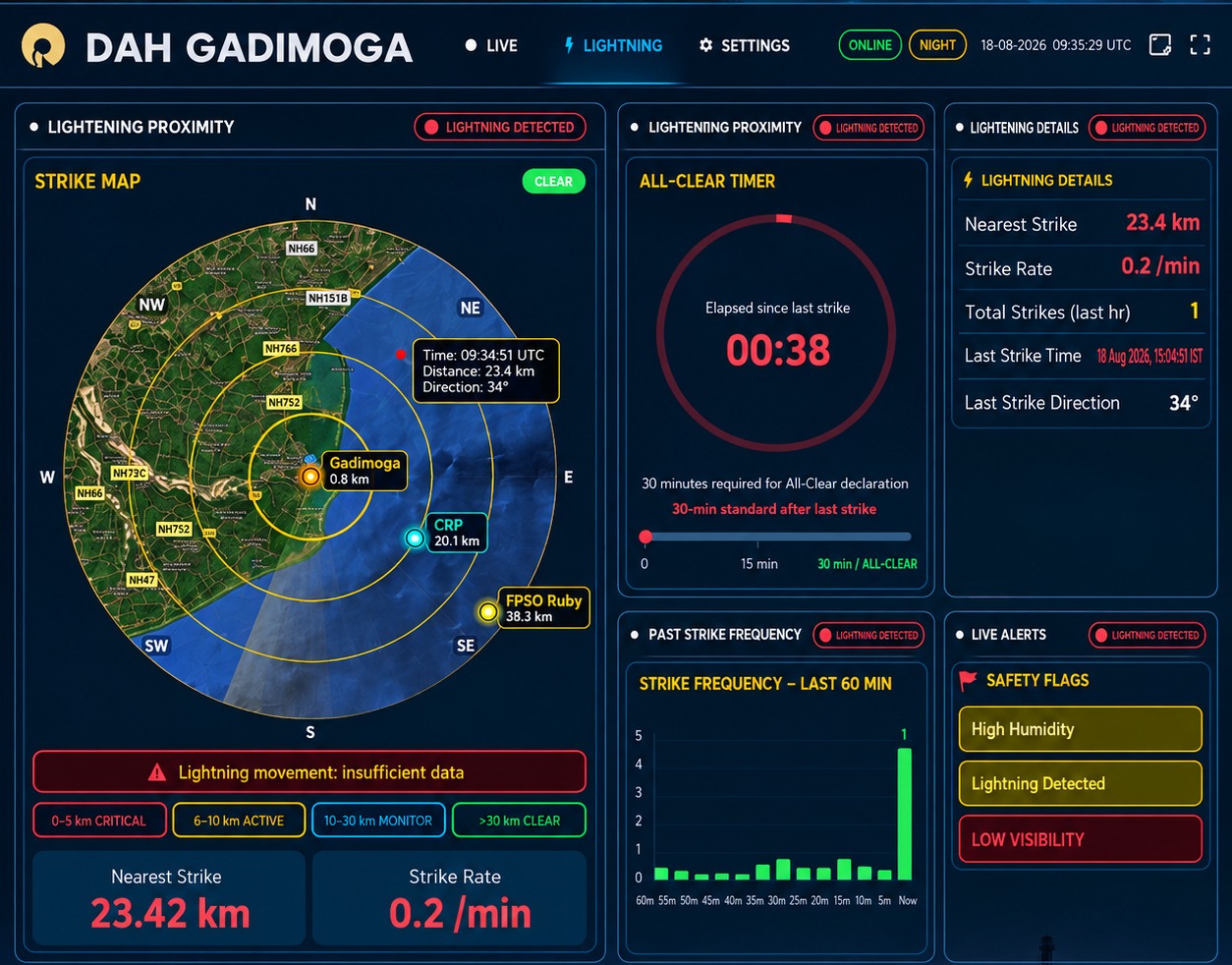
Display and Processing Software

Display and Processing Software

Processes data received from meteorological sensors and displays real-time weather information through a centralized monitoring interface. We provide software for data visualization, logging, and monitoring of helipad weather conditions.

WhatsApp Logo